Imagine reducing your monthly electricity bill dramatically and producing your own power from sunlight. With rooftop solar, this is no longer just an idea—it is becoming a practical option for many Indian households.
The phrase “Lifetime Free Electricity” is commonly used to describe the long-term savings possible after installing a solar power system. While solar installation has an initial cost, the system can continue generating electricity for many years, helping homeowners reduce their dependence on grid electricity and lower their monthly bills.
What Does “Lifetime Free Electricity” Actually Mean?
“Lifetime free electricity” does not mean that electricity becomes completely free under every circumstance.
Instead, it refers to the long-term benefit of generating electricity from your own rooftop solar system. Once the system is installed, sunlight becomes your energy source, so your electricity generation cost can be very low compared with continuously purchasing electricity from the grid.
Your actual bill depends on factors such as:
- Solar system capacity
- Household electricity consumption
- Electricity tariff
- Rooftop sunlight and shading
- Net-metering or applicable DISCOM rules
- Maintenance and other applicable charges
With the right system size and proper installation, solar can significantly reduce your electricity expenses.
How Does Rooftop Solar Reduce Your Electricity Bill?
A rooftop solar system uses photovoltaic panels to convert sunlight into electricity.
The electricity generated can be used to power appliances such as:
- Fans
- Lights
- Refrigerators
- Televisions
- Water pumps
- Air conditioners
- Other household appliances
With a properly designed system, you can generate a substantial portion of your household’s annual electricity requirement from your own rooftop.
This means less electricity needs to be purchased from the grid.
Can Solar Give You a ₹0 Electricity Bill?
In some situations, solar can help households achieve a very low electricity bill, and under suitable consumption, generation and applicable billing arrangements, the electricity charge can potentially approach ₹0.
However, ₹0 should not be treated as a universal guarantee.
The final bill can still depend on fixed charges, taxes, minimum charges, meter-related charges, electricity consumption and local DISCOM regulations.
This is why the correct approach is to calculate your expected solar generation and savings before installation.
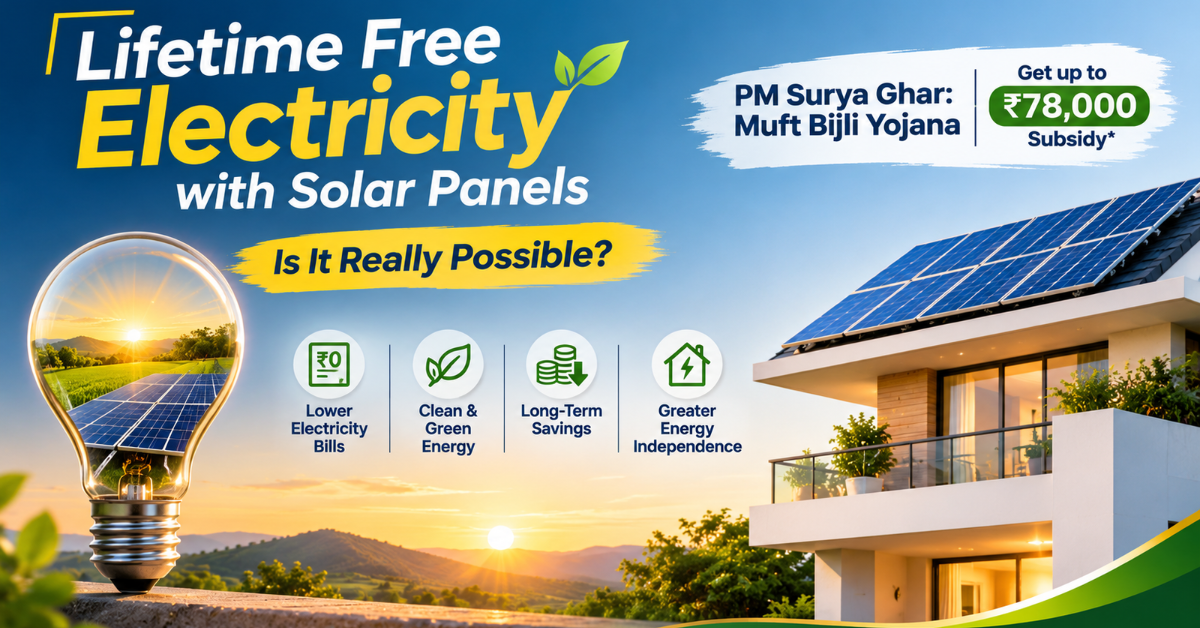
PM Surya Ghar: Muft Bijli Yojana
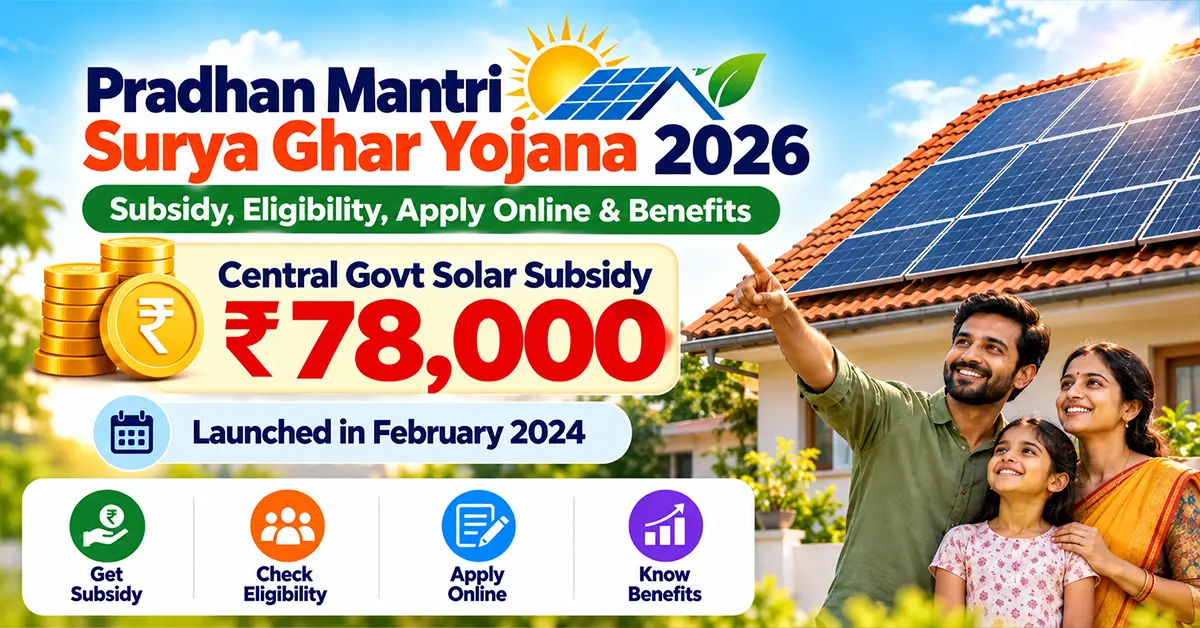
The Government of India’s PM Surya Ghar: Muft Bijli Yojana is designed to encourage residential rooftop solar adoption.
According to the Ministry of New and Renewable Energy (MNRE), the scheme aims to help provide free or low-cost electricity of up to 300 units per month to 1 crore households through rooftop solar installations.
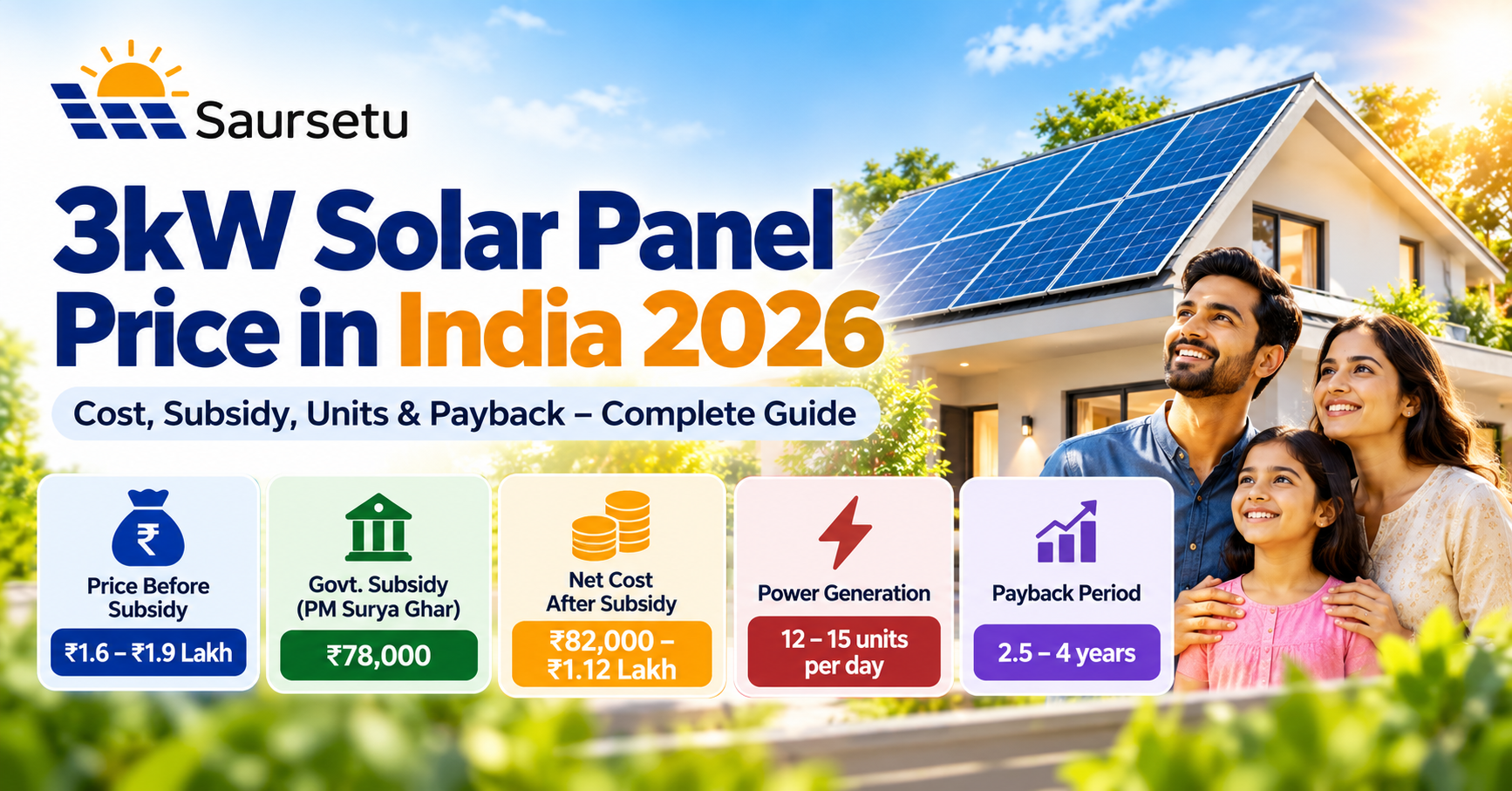
The scheme also provides Central Financial Assistance for eligible residential rooftop solar systems. Current MNRE information states that the subsidy is:
- ₹30,000 for a 1 kW system
- ₹60,000 for a 2 kW system
- ₹78,000 for a 3 kW or larger system
The subsidy structure is subject to the applicable government guidelines and eligibility conditions.
Why Solar Can Be a Long-Term Investment
Solar panels are designed for long-term operation. Instead of paying an electricity bill every month without owning the source of generation, a homeowner can invest in a solar system that generates electricity for years.
The long-term benefits can include:
1. Lower Electricity Bills
Generating your own electricity can substantially reduce your dependence on grid power.
2. Protection Against Rising Electricity Costs
As electricity tariffs change over time, generating more of your own power can provide greater control over your future energy expenses.
3. Clean Energy
Solar electricity is generated without directly burning fossil fuels during operation, helping reduce the environmental impact associated with conventional electricity generation.
4. Long-Term Savings
Although installation requires an initial investment, the savings accumulated over many years can make rooftop solar financially attractive.
5. Increased Energy Independence
Producing electricity on your own property gives you greater control over where your energy comes from.
How Much Solar Capacity Does Your Home Need?
There is no single solar system size that is right for every home.
Your ideal system depends on:
- Monthly electricity consumption
- Average electricity bill
- Available rooftop area
- Roof orientation and shading
- Local sunlight conditions
- Appliances used at home
- Applicable DISCOM regulations
For example, a household with moderate electricity consumption may require a different system from a home that regularly uses multiple air conditioners or other high-consumption appliances.
A professional site assessment is therefore important before installation.
Solar + Government Subsidy = Bigger Savings
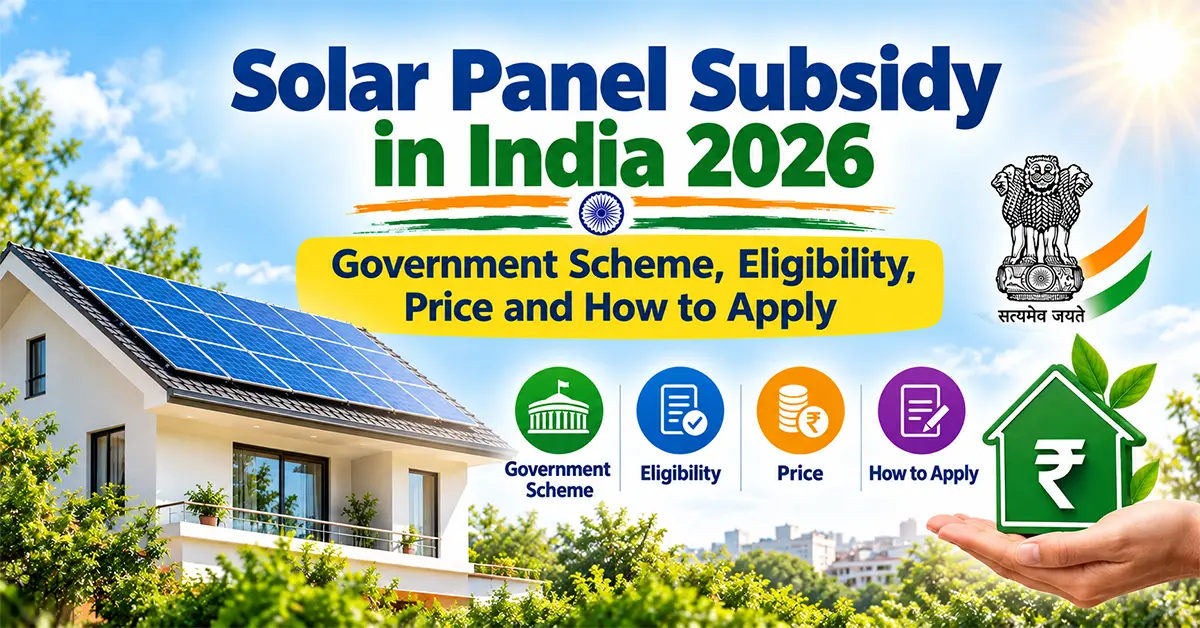
For eligible households, government subsidy can reduce the effective cost of installing a rooftop solar system.
The PM Surya Ghar scheme allows eligible residential consumers to apply through the National Portal and select an appropriate vendor for installation.
This combination of solar generation + government support + long-term savings is one reason rooftop solar is becoming increasingly attractive to Indian households.
Is “Lifetime Free Electricity” Right for Every Home?
Solar can be an excellent option, but it should be evaluated according to your individual electricity consumption and property.
Before installing solar, consider:
Your electricity bill → Your consumption → Available rooftop space → Suitable system size → Applicable subsidy → Expected generation → Long-term savings
This calculation can help you understand whether solar is financially suitable for your home.
Why Choose SaurSetu for Your Solar Journey?
SaurSetu helps homeowners move toward solar with support across the installation journey.
Our services include:
- Residential rooftop solar installation
- Solar consultation
- Subsidy assistance
- Documentation support
- DISCOM support
- Solar system maintenance
- On-grid and off-grid solar solutions
SaurSetu also provides a 25-year warranty through its installation and partner network, according to the services listed on the website.
Our goal is simple: make solar adoption easier, more transparent and more accessible for Indian households.
Final Thoughts
Lifetime Free Electricity is best understood as a long-term solar savings concept—not a promise that every electricity bill will automatically become ₹0 forever.
With the right rooftop solar system, appropriate installation, available government subsidy and efficient energy usage, homeowners can significantly reduce their electricity expenses and generate clean energy for years.
If you’re considering solar for your home, the first step is to understand your electricity consumption and rooftop potential.
Go solar today. Generate your own power. Save for years.
Frequently Asked Questions
- Is lifetime free electricity really possible with solar?
Solar can generate electricity for many years and significantly reduce electricity costs. However, a ₹0 bill is not guaranteed for every household because billing rules, fixed charges, consumption and other factors can apply. - How long does a rooftop solar system last?
Solar panels are designed for long-term operation, with many systems continuing to generate electricity for decades. Individual components may have different warranty and replacement periods. - Can I get a government subsidy for rooftop solar?
Eligible residential consumers may receive Central Financial Assistance under the PM Surya Ghar: Muft Bijli Yojana, subject to current guidelines and eligibility. - Can solar reduce my electricity bill to ₹0?
It can potentially reduce the electricity charge substantially, but the final bill depends on generation, consumption, net-metering/billing arrangements and applicable fixed charges. - How do I know what solar system size my home needs?
Your monthly electricity consumption, rooftop area, sunlight conditions and appliance usage should be evaluated before selecting a system size.