The Pradhan Mantri Surya Ghar Yojana, officially known as PM Surya Ghar: Muft Bijli Yojana, is a Government of India scheme that encourages households to install rooftop solar panels and reduce their electricity expenses. Under this scheme, eligible residential consumers can receive a central government subsidy for installing an approved rooftop solar system.
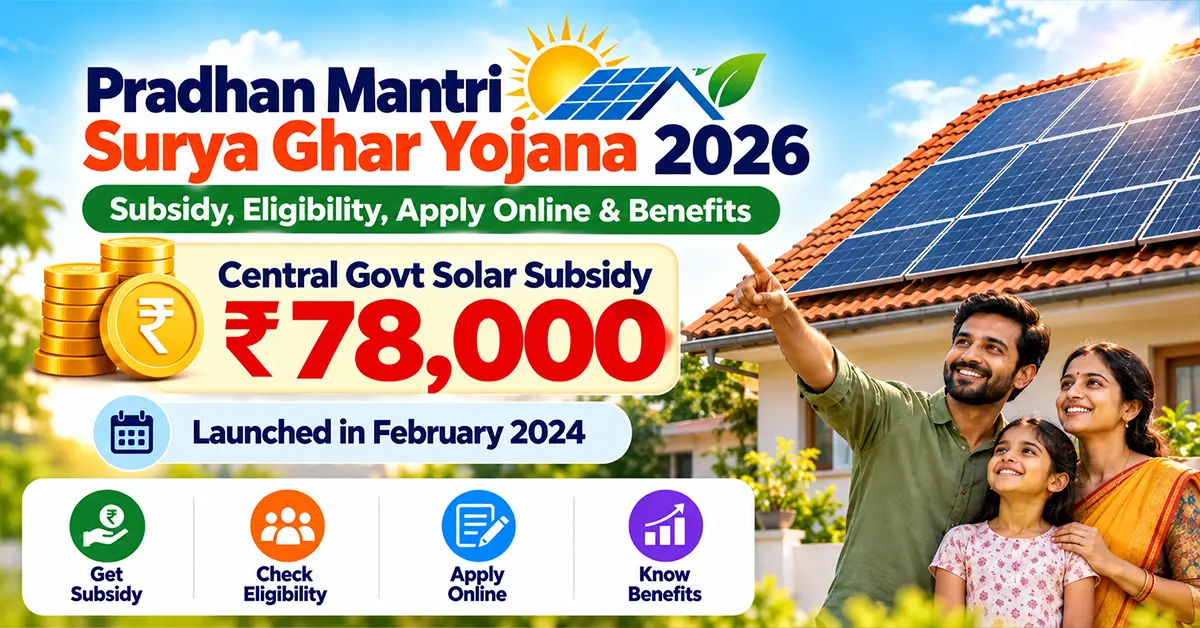
Launched in February 2024, the scheme aims to support rooftop solar installations in one crore households across India. The subsidy can be as high as ₹78,000 for eligible residential systems in most states, depending on the installed capacity and applicable scheme rules.
If you are searching for the PM Solar Panel Yojana, PM Free Solar Yojana or Pradhan Mantri Solar Yojana, this guide explains the official scheme, subsidy amounts, eligibility criteria, documents, application process and estimated installation costs.
What Is Pradhan Mantri Surya Ghar Yojana?
The Pradhan Mantri Surya Ghar Yojana is a government initiative designed to make rooftop solar energy more affordable for Indian households. Its official name is PM Surya Ghar: Muft Bijli Yojana, and it is implemented by the Ministry of New and Renewable Energy (MNRE).
The scheme was launched by Prime Minister Narendra Modi on 13 February 2024. The Union Cabinet subsequently approved a total financial outlay of ₹75,021 crore to support the programme.
The main objective is to help residential electricity consumers install grid-connected rooftop solar systems, reduce their dependence on electricity purchased from the grid and benefit from lower electricity bills. The scheme also aims to encourage clean energy adoption and support India’s renewable energy goals.
Under the scheme, eligible households can receive Central Financial Assistance (CFA), commonly called a solar subsidy. The subsidy is available for qualifying residential rooftop solar installations that follow the prescribed application, installation and verification procedures.
The scheme is often searched online using terms such as PM Modi Solar Panel Yojana, PM Har Ghar Solar Yojana and Pradhan Mantri Solar Panel Yojana. These are popular search variations, but the official scheme name remains PM Surya Ghar: Muft Bijli Yojana.
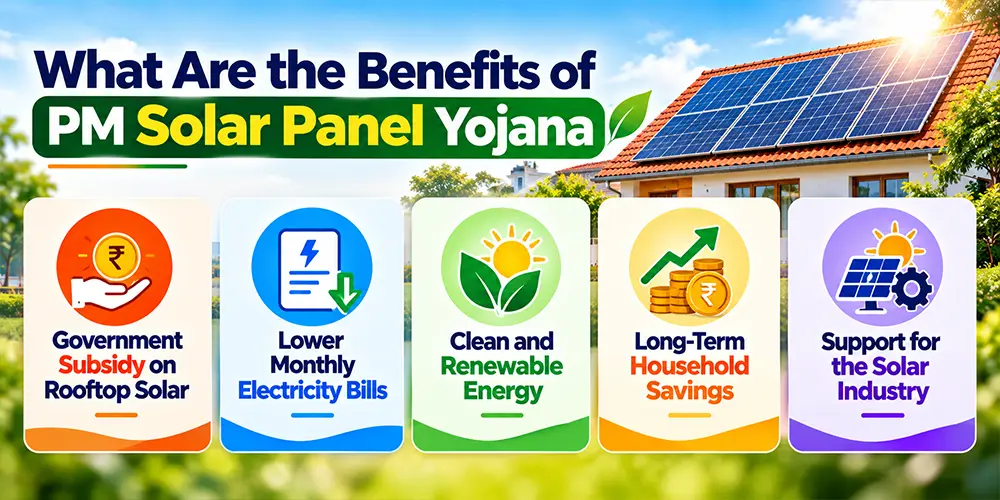
What Are the Benefits of PM Solar Panel Yojana?
The PM Solar Panel Scheme offers several potential benefits to households that install eligible rooftop solar systems.
1. Government subsidy on rooftop solar
Eligible households can receive financial assistance towards the cost of installing rooftop solar panels. This reduces the initial investment required to adopt solar energy.
2. Lower monthly electricity bills
Solar panels generate electricity from sunlight during the day. This electricity can power household appliances and reduce the amount of electricity purchased from the local distribution company.
Actual savings depend on your electricity consumption, solar system capacity, sunlight, local electricity tariffs and billing arrangements.
3. Potential to reduce electricity expenses significantly
A properly sized rooftop solar system can cover a substantial part of a household’s electricity demand. Some households may achieve very low or even zero electricity bills, depending on their consumption and applicable charges. However, zero bills are not guaranteed for every consumer.
4. Clean and renewable energy
Solar energy reduces dependence on conventional electricity generation and can help lower associated carbon emissions.
5. Long-term household savings
Although installation requires an initial investment, a well-designed solar system can generate electricity for many years. Its financial benefit depends on installation quality, maintenance, equipment performance and future electricity prices.
6. Support for the solar industry
The scheme also creates opportunities for solar installers, equipment suppliers, technicians and other professionals working in the renewable energy sector.
PM Surya Ghar Yojana Subsidy Amount 2026
One of the most important aspects of the Pradhan Mantri Surya Ghar Yojana is the subsidy provided for eligible residential rooftop solar installations.
For most states and Union Territories, the standard central subsidy structure is ₹30,000 per kW for the first 2 kW and ₹18,000 for the additional 1 kW. The central subsidy is capped at ₹78,000 for eligible systems of 3 kW or above.
| Solar system capacity | Standard central subsidy |
|---|---|
| 1 kW | ₹30,000 |
| 2 kW | ₹60,000 |
| 3 kW | ₹78,000 |
| 4 kW | ₹78,000 maximum |
| 5 kW | ₹78,000 maximum |
These amounts represent the standard central subsidy, not the full cost of purchasing and installing a solar system. Special-category states and Union Territories may have different subsidy rates, so applicants should verify the applicable amount through official scheme guidelines.
Is there a subsidy for solar systems above 3 kW?
Under the standard central subsidy structure, the maximum CFA for an eligible residential rooftop solar system is ₹78,000. Installing a system with a capacity greater than 3 kW does not automatically increase this central subsidy.
A higher-capacity system may still be useful for households with greater electricity consumption, but its additional cost must be evaluated separately.
How is the subsidy paid?
Applicants must follow the official application and installation process. After the required installation, inspection and verification steps are completed, the subsidy is processed according to the scheme’s rules and the applicant’s verified details. Do not assume that the subsidy will be credited immediately after registration.
Who Is Eligible for Pradhan Mantri Solar Panel Yojana?
Eligibility depends on the official scheme requirements and the applicant’s electricity connection and installation details.
The main points to check are:
- The applicant must meet the scheme’s citizenship and other applicable eligibility requirements.
- The property must have a qualifying residential electricity connection.
- The proposed system must meet the requirements for an eligible grid-connected rooftop solar installation.
- The installation must follow the prescribed process and applicable technical standards.
- The applicant must provide the required consumer, bank and other details.
- The installation must satisfy the relevant inspection and verification requirements.
Can tenants apply for the scheme?
Tenants may face practical limitations because rooftop solar installation generally requires permission from the property owner. Eligibility also depends on the electricity connection, roof rights and the official application requirements.
If you live in a rented property, discuss the installation with the owner and verify the application conditions before proceeding.
Can commercial establishments apply?
The residential subsidy should not be assumed to apply to commercial or industrial electricity connections. Businesses should check the specific government programmes, financing options and policies applicable to their consumer category.
Can an existing solar system receive a subsidy?
A subsidy is not automatically available for every existing solar installation. The application timing, previous subsidy assistance, system eligibility and current scheme rules matter. Check the official portal before purchasing equipment or making changes to an existing installation.
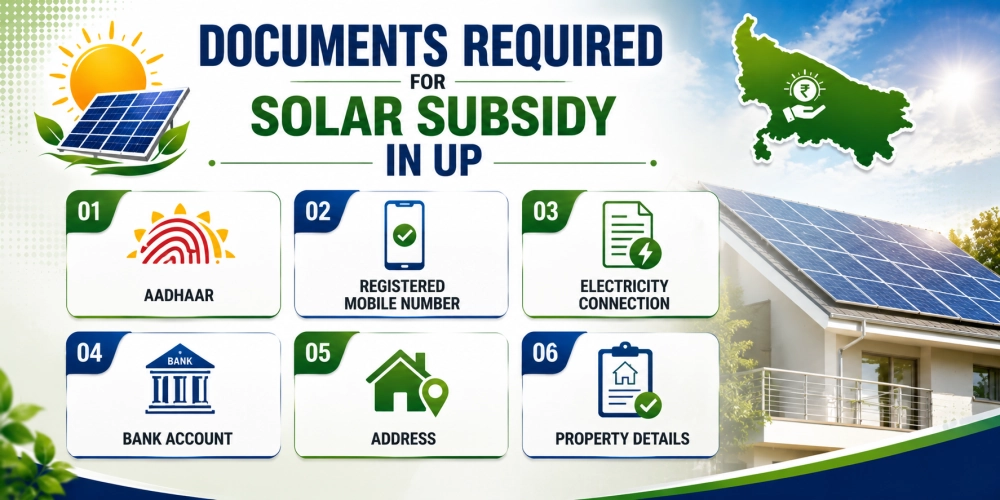
Documents Required for PM Surya Ghar Yojana Registration
Keep the following information ready before starting your application:
- Electricity consumer number or details from your latest electricity bill.
- Registered mobile number for application-related communication.
- Applicant details as requested on the official portal.
- Bank account information for subsidy processing.
- Any additional documents requested during verification or by the relevant electricity distribution company.
The documents required at each stage may differ. Follow the current portal instructions rather than relying on an unofficial checklist.
How to Apply for Pradhan Mantri Surya Ghar Yojana Online
Eligible residential consumers can begin the application process through the official National Portal.
Official website: https://pmsuryaghar.gov.in/
Follow these steps:
Step 1: Visit the official portal: Open the PM Surya Ghar portal and locate the consumer registration option.
Step 2: Select your state and electricity distribution company: Choose the appropriate state and the distribution company (DISCOM) supplying electricity to your property.
Step 3: Enter your consumer details: Provide the required electricity consumer number, mobile number and other requested information. Check the details carefully before submitting them.
Step 4: Complete registration: Follow the instructions to complete your registration and submit the application.
Step 5: Complete the required feasibility process: Your application must follow the applicable technical feasibility and approval procedures. Wait for the required approval before proceeding with installation.
Step 6: Select an eligible registered vendor: Choose a vendor listed under the relevant scheme and verify the proposed system capacity, equipment specifications, price, warranty and installation scope.
Step 7: Install the rooftop solar system: After completing the required approval steps, arrange installation in accordance with the scheme’s technical requirements.
Step 8: Complete inspection and metering formalities: The installation must undergo the required verification. Applicable meter installation, testing and grid connection procedures must also be completed.
Step 9: Submit the required bank details: Provide and verify the bank details and other information required for subsidy processing.
Step 10: Track your application: Use the official portal to check the status of your application and subsidy. If your application remains pending, review the status message and follow the instructions provided by the portal or relevant DISCOM.
Important: Follow the current official process at every stage. Avoid paying an unverified agent who promises guaranteed approval or immediate subsidy payment.
PM Solar Rooftop Yojana: Solar Panel Cost After Subsidy
The total cost of a rooftop solar installation depends on the system capacity, equipment quality, roof condition, mounting structure, wiring, inverter, labour and local market prices.
The following example illustrates how the subsidy affects the cost.
| System capacity | Illustrative gross cost | Standard central subsidy | Illustrative balance |
|---|---|---|---|
| 1 kW | ₹70,000 | ₹30,000 | ₹40,000 |
| 2 kW | ₹1,30,000 | ₹60,000 | ₹70,000 |
| 3 kW | ₹1,80,000 | ₹78,000 | ₹1,02,000 |
These installation prices are examples for calculation only, not official benchmark prices or quotations. Actual vendor prices may be higher or lower.
The balance shown is the estimated gross installation cost minus the central subsidy. It does not include any additional financing costs or unlisted expenses.
What affects the final solar installation cost?
Several factors can influence the price:
- Solar panel brand, type and capacity.
- Inverter specifications and equipment compatibility.
- Roof height, accessibility and mounting requirements.
- Wiring, earthing, protection devices and metering requirements.
- Labour, transport and installation complexity.
- Optional battery backup or hybrid-system components.
A standard grid-connected solar system does not automatically include a battery. If you require backup during power cuts, discuss the appropriate system design and additional costs with your installer.
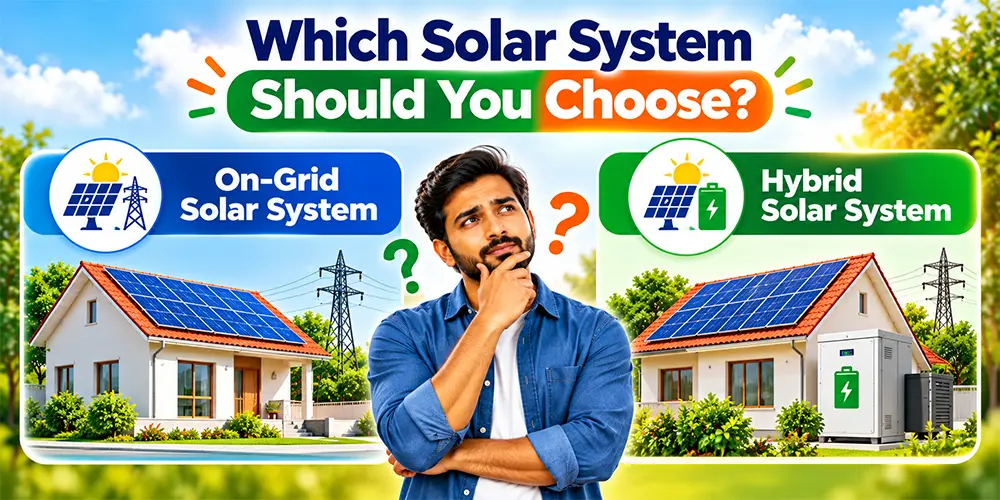
Which Solar System Should You Choose?
Before installing solar panels, understand the main system types.
On-grid solar system
An on-grid system is connected to the electricity grid. Solar electricity is used by household appliances, while the grid supplies additional electricity when required. Depending on local regulations and metering arrangements, eligible surplus electricity may be exported to the grid.
Hybrid solar system
A hybrid system combines solar generation with battery storage and grid connectivity. It can provide backup when designed with suitable batteries and backup circuits. However, the additional equipment increases the overall cost, and eligibility for subsidy must be checked under the applicable scheme rules.
How much solar capacity does your home need?
The correct system size depends on your electricity bills, daily consumption, roof space, available sunlight and expected future usage.
A 1 kW system may suit a household with modest consumption, while a 2 kW or 3 kW system may be more suitable for a household using more electricity. These are only broad examples, not fixed recommendations.
Ask the installer to assess your electricity consumption before finalising the capacity.
PM Solar Panel Yojana in Uttar Pradesh (UP)
Residents of Uttar Pradesh can explore the Pradhan Mantri Surya Ghar Yojana through the official national portal.
The general process includes selecting Uttar Pradesh, identifying the relevant electricity distribution company, entering the consumer details and following the required approval and installation steps.
Before applying, check:
- Whether your residential electricity connection meets the scheme requirements.
- Which DISCOM serves your property.
- Whether the selected vendor is eligible under the applicable scheme.
- Whether any additional state-level assistance is available under current government orders.
The central subsidy and any state subsidy should be treated separately. Do not assume that every household receives additional state assistance without checking the current rules.
Also Read: Solar Subsidy in UP: Complete Guide to Solar Panel, Rooftop & Solar Pump Subsidy
PM Solar Panel Yojana in Madhya Pradesh (MP)
Households in Madhya Pradesh can also check their eligibility through the official PM Surya Ghar portal.
Applicants should select the correct state and electricity distribution company, provide accurate consumer details and follow the applicable technical approval and installation process.
Before selecting an installer, verify the vendor’s registration status, system specifications, price and warranty terms. Check official Madhya Pradesh government or DISCOM announcements for any state-specific assistance that may apply.
Whether you live in Uttar Pradesh, Madhya Pradesh or another state, the applicable central subsidy depends on the scheme’s rules and your eligibility, not simply on the name used to search for the scheme.
How to Check PM Surya Ghar Yojana Application and Subsidy Status
After applying, visit the official portal and log in using the appropriate credentials.
Look for the application or installation status displayed for your consumer account. Depending on the stage, you may need to complete a pending approval, correct a detail, submit requested information or arrange inspection and metering.
If your subsidy has not been processed, verify that the installation and verification steps are complete and that the submitted bank details are correct. Use the official support channels if the portal identifies an unresolved issue.
Keep your application reference and relevant communication available when contacting the support team.
Common Mistakes to Avoid When Applying
Avoid these common mistakes when applying under the PM Solar Rooftop Yojana:
- Selecting a vendor without verifying their eligibility.
- Entering incorrect electricity consumer or bank details.
- Installing the system before completing the required approval steps.
- Assuming the government will pay the entire installation cost.
- Ignoring inspection, metering or technical requirements.
- Believing advertisements that promise completely free solar panels to every household.
- Relying on unofficial websites for subsidy amounts or application links.
Careful planning can help prevent delays and unexpected costs.
Frequently Asked Questions About Pradhan Mantri Surya Ghar Yojana
1. What is Pradhan Mantri Surya Ghar Yojana?
It is a Government of India scheme that supports eligible residential consumers in installing rooftop solar systems through central financial assistance. Its official name is PM Surya Ghar: Muft Bijli Yojana.
2. Is PM Free Solar Yojana really free?
Not necessarily. The scheme provides a subsidy towards the cost of an eligible rooftop solar system. The household generally pays the remaining installation cost, unless another applicable benefit or arrangement changes the amount payable.
3. How much subsidy can I receive in 2026?
Under the standard central subsidy structure for most states, eligible systems receive ₹30,000 per kW for the first 2 kW and ₹18,000 for the additional 1 kW, up to a maximum of ₹78,000. Special-category states may have different rates.
4. How can I apply for PM Surya Ghar Yojana online?
Visit https://pmsuryaghar.gov.in/, register using your electricity consumer details, complete the applicable approval process, select an eligible vendor and follow the required installation and subsidy procedures.
5. Can residents of Uttar Pradesh and Madhya Pradesh apply?
Eligible residential consumers in both states can apply through the official portal. They must follow the requirements applicable to their electricity distribution company and installation.
6. How many units can a rooftop solar system generate?
Generation depends on the system capacity, sunlight, weather, orientation, shading and equipment performance. The actual monthly output can vary, so obtain a site-specific estimate before installation.
7. Does the scheme guarantee zero electricity bills?
No. Solar panels can reduce electricity expenses, but the final bill depends on consumption, solar generation, fixed charges, metering arrangements and applicable tariffs.
8. Where can I check official scheme information?
Visit the PM Surya Ghar National Portal and the Ministry of New and Renewable Energy for official information and current guidelines.
Get Expert Help With Your Rooftop Solar Installation
Installing solar panels can be a practical way to reduce household electricity expenses while adopting clean energy. However, choosing the correct system capacity, understanding the subsidy and selecting a suitable installer are important steps.
SaurSetu helps homeowners explore rooftop solar solutions through solar consultation, subsidy guidance and installation support. Before proceeding, assess your electricity consumption, available roof space, expected installation cost and eligibility under the current scheme.
Planning to install rooftop solar at your home? Visit SaurSetu to explore solar solutions and get guidance for your installation journey.
Remember that the final subsidy amount and approval depend on the official scheme requirements and verification by the relevant authorities.
Also Read: Solar Plant Subsidy in India: Government Subsidy, Eligibility & Application Process